
Chapters
-
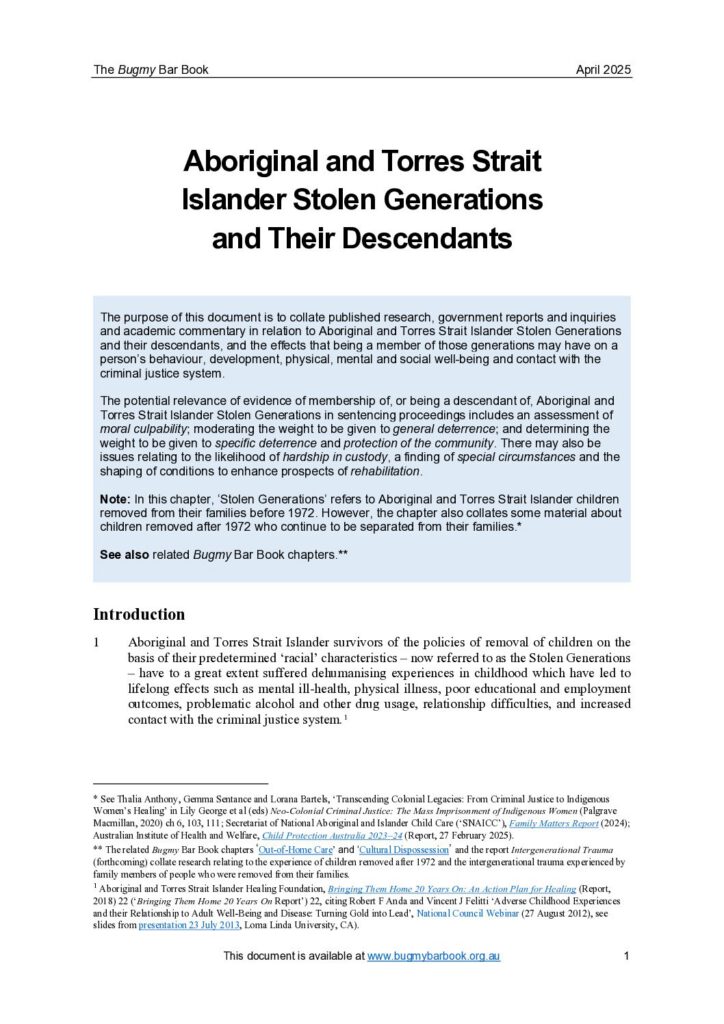
Aboriginal and Torres Strait Islander Stolen Generations and Descendants
Forcible removals of Aboriginal and Torres Strait Islander children have had long-term, intergenerational traumatic impacts on individuals and their families and descendants. Rates of Indigenous child removal have increased, not lessened.
Read more: Aboriginal and Torres Strait Islander Stolen Generations and Descendants -
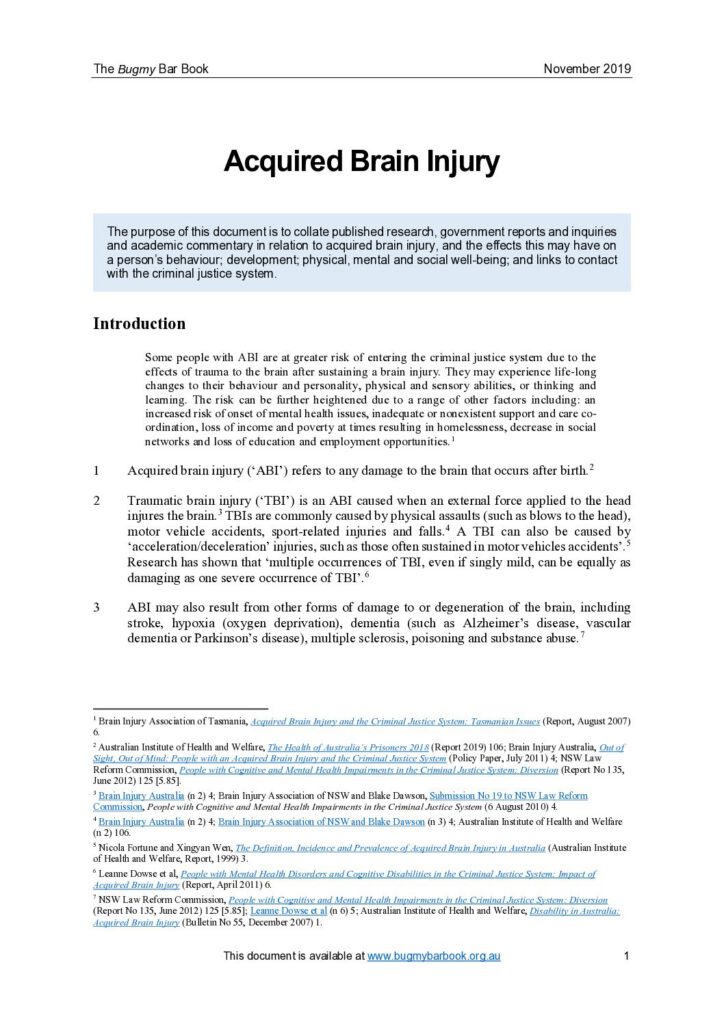
Acquired Brain Injury
Acquired brain injury (ABI) refers to any damage to the brain that occurs after birth. ABI can result in ‘deterioration in cognitive, physical, emotional or independent functioning’. Research has found high rates of comorbidity between ABI and mental illness.
Read more: Acquired Brain Injury -
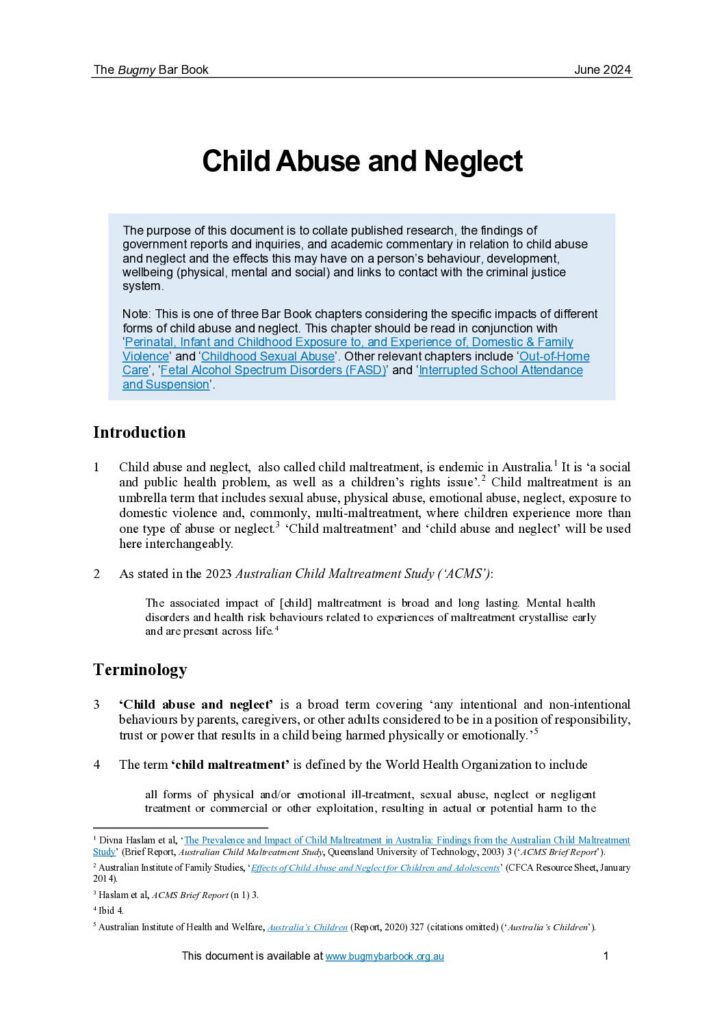
Child Abuse and Neglect
Child abuse and neglect is far more prevalent than previously estimated in Australia. It can have lifelong and intergenerational consequences. Including sexual abuse, physical abuse, emotional abuse, neglect, exposure to domestic violence and multi-maltreatment it can fundamentally change a child’s cognition and neurobiological systems and impair emotion recognition and regulation.
Read more: Child Abuse and Neglect -
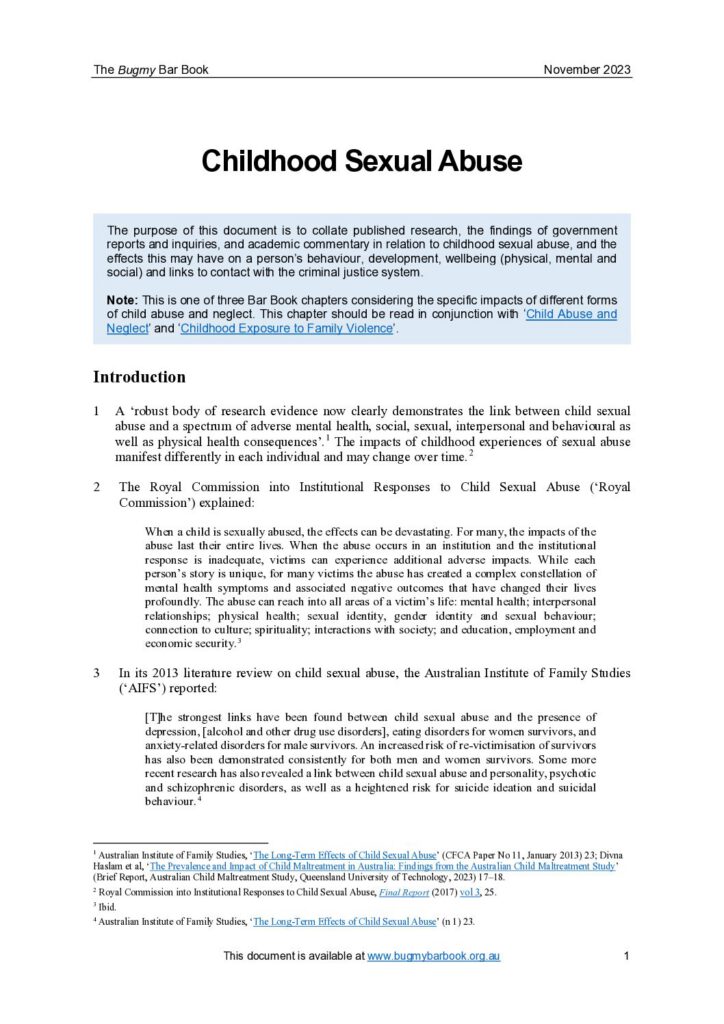
Childhood Sexual Abuse
A ‘robust body of research evidence now clearly demonstrates the link between child sexual abuse and a spectrum of adverse mental health, social, sexual, interpersonal and behavioural as well as physical health consequences’. The impacts of childhood experiences of sexual abuse manifest differently in each individual and may change over time. However, mental health disorders associated with experiences of child sexual abuse are often lifelong.
Read more: Childhood Sexual Abuse -
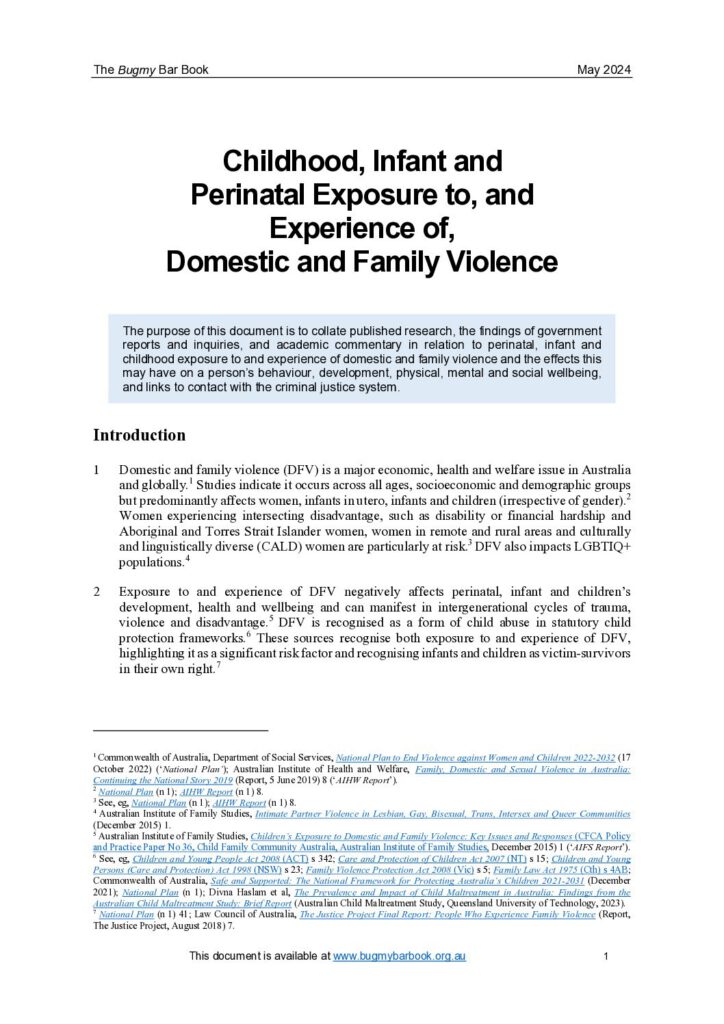
Childhood, Infant and Perinatal Exposure to, and Experience of, Domestic & Family Violence
Empirical evidence of the effects of exposure to domestic and family violence on children’s development and a growing recognition of the ways these harms can manifest in intergenerational cycles of trauma, violence and disadvantage.
Read more: Childhood, Infant and Perinatal Exposure to, and Experience of, Domestic & Family Violence -
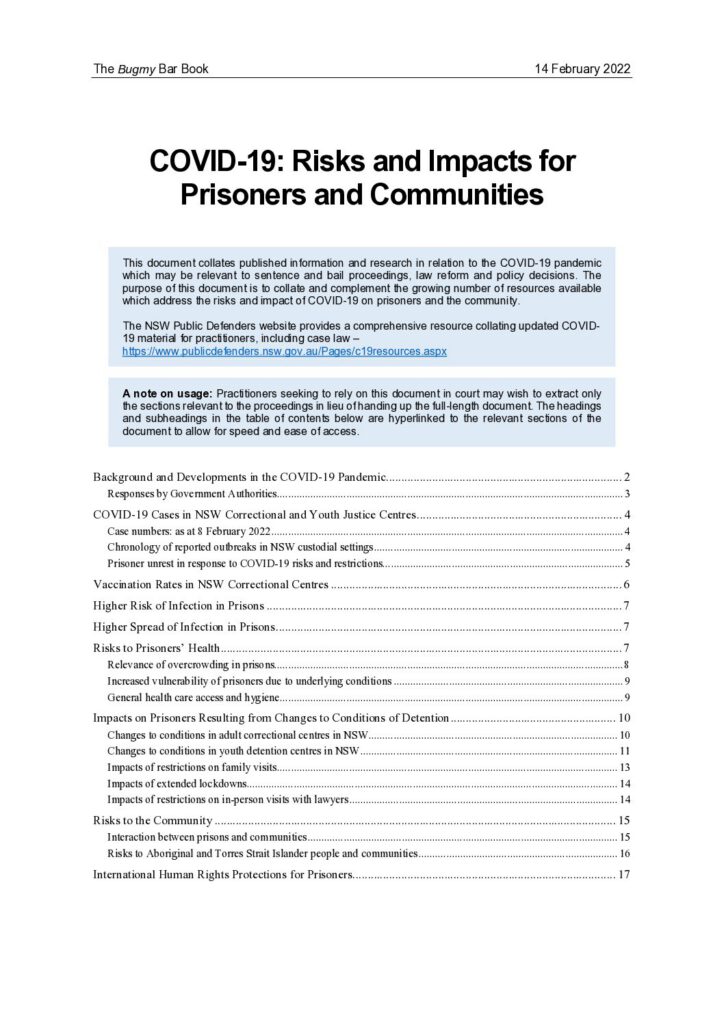
COVID-19 Risks and Impacts for Prisoners and Communities
This chapter collates published research, government and parliamentary committee reports, and academic commentary in relation to COVID-19 which may be relevant to sentence and bail proceedings, law reform and policy decisions.
Read more: COVID-19 Risks and Impacts for Prisoners and Communities -
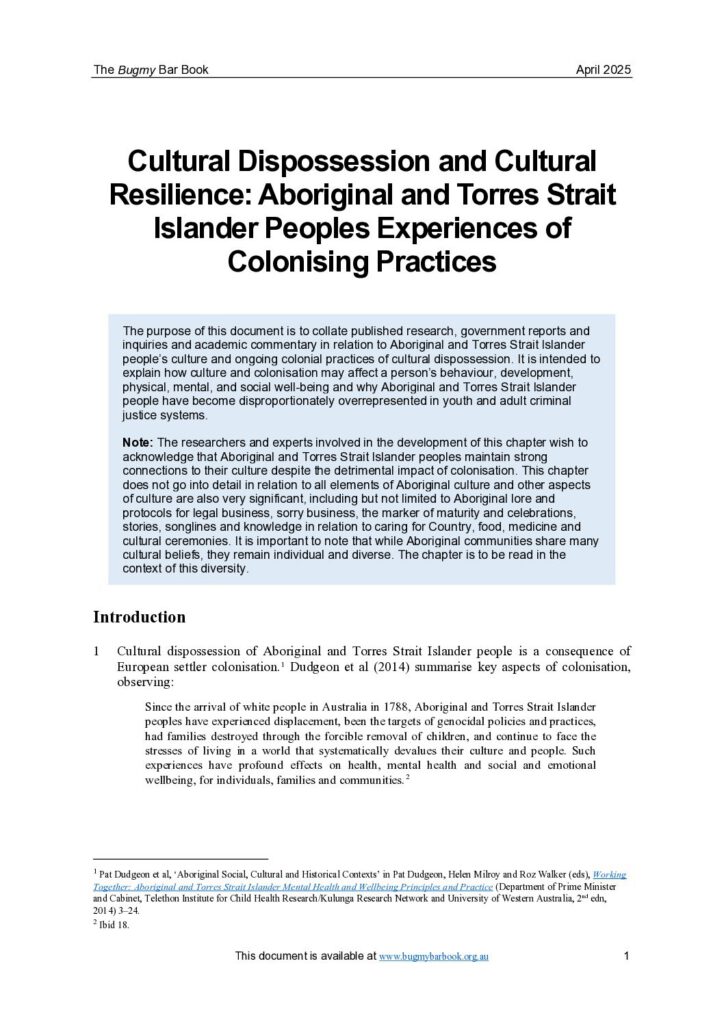
Cultural Dispossession and Cultural Resilience: Aboriginal and Torres Strait Islander Peoples Experiences of Colonising Practices
This chapter explores the elements of culture and ways in which destruction of culture has occurred through colonisation in ways that may affect a person’s behaviour, development, physical, mental, and social well-being and lead to being overrepresented in youth and adult criminal justice systems.
Read more: Cultural Dispossession and Cultural Resilience: Aboriginal and Torres Strait Islander Peoples Experiences of Colonising Practices -
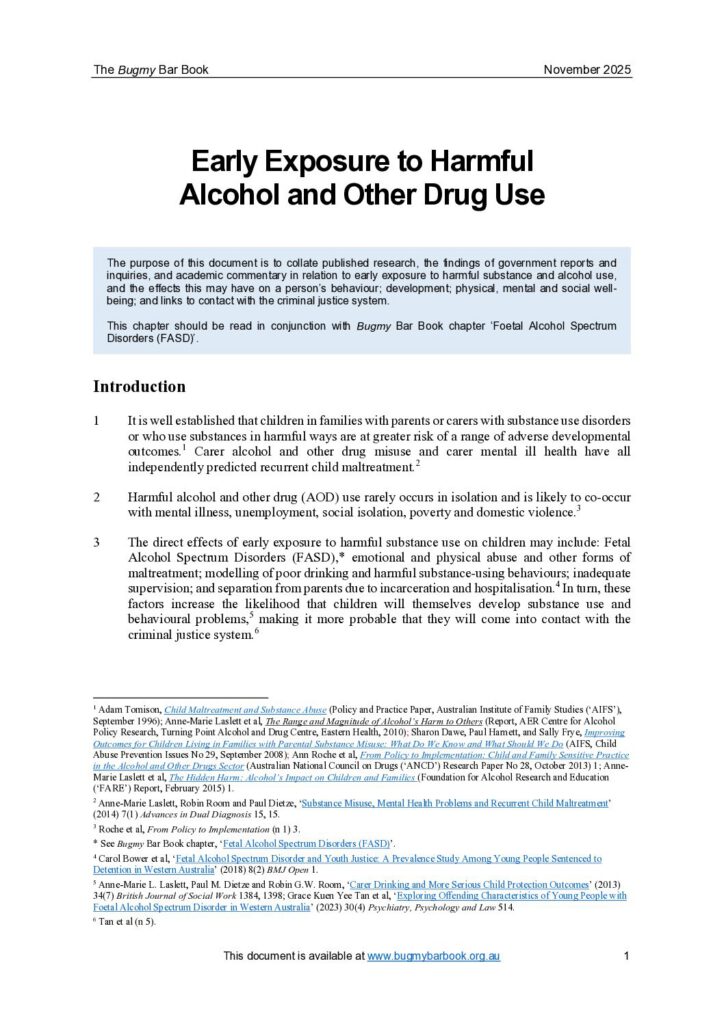
Early Exposure to Alcohol and Other Drug Abuse
Research shows that children in families with parental or carer substance abuse are at greater risk of a range of adverse developmental outcomes. Living in a household where misuse of alcohol and other drugs occurs is may increase the likelihood of children being substance misusers themselves and being involved in the juvenile justice system.
Read more: Early Exposure to Alcohol and Other Drug Abuse -
Fetal Alcohol Spectrum Disorders (FASD)
Foetal Alcohol Spectrum Disorders (‘FASD’) is an umbrella term for a range of physical, cognitive, behavioural and neurodevelopmental impairments and secondary disabilities that may be experienced by individuals who were prenatally exposed to alcohol. FASD is a preventable, life-long condition with no cure that remains largely invisible and under-recognised in Australia.
Read more: Fetal Alcohol Spectrum Disorders (FASD) -
Hearing Impairment
The potential relevance of evidence of hearing impairment in sentencing proceedings includes an assessment of moral culpability; moderating the weight to be given to general deterrence; and determining the weight to be given to specific deterrence and protection of the community. There may also be issues relating to the likelihood of hardship in custody.
Read more: Hearing Impairment -
Homelessness
The causes of homelessness ‘are complex, with no single trigger’. Australian research has found that the most consistent predictors of long-term homelessness are interactions with substance abuse, mental illness and the out-of-home care system.
Read more: Homelessness -
Impacts of Custody and Detention on Young People
Young people involved in the criminal justice system are widely recognised as ‘among the most disadvantaged’. These circumstances – which include health and social inequalities and ‘pre-existing neurodevelopmental disabilities and mental ill-health’ – make young people more likely to become justice-involved.
Read more: Impacts of Custody and Detention on Young People -
Impacts of Imprisonment and Remand in Custody
Australian and international research suggests that incarceration during adolescence can have profound immediate and ongoing adverse health effects throughout adulthood.
Read more: Impacts of Imprisonment and Remand in Custody -
Incarceration of a Parent or Caregiver
Parental incarceration may have impacts upon a child’s emotional, behavioural, and psychological development, educational performance and likelihood of coming into contact with the criminal process.
Read more: Incarceration of a Parent or Caregiver -
Interrupted School Attendance and Suspension
Research shows that the negative impacts of interrupted schooling may be varied, including poor educational outcomes, poor health and wellbeing outcomes, and marginalisation.
Read more: Interrupted School Attendance and Suspension -
Low Socio-Economic Status
Low socio-economic status may have impacts on childhood development, education and employment, health and disability, social exclusion, homelessness and increased risk of contact with the criminal process.
Read more: Low Socio-Economic Status -
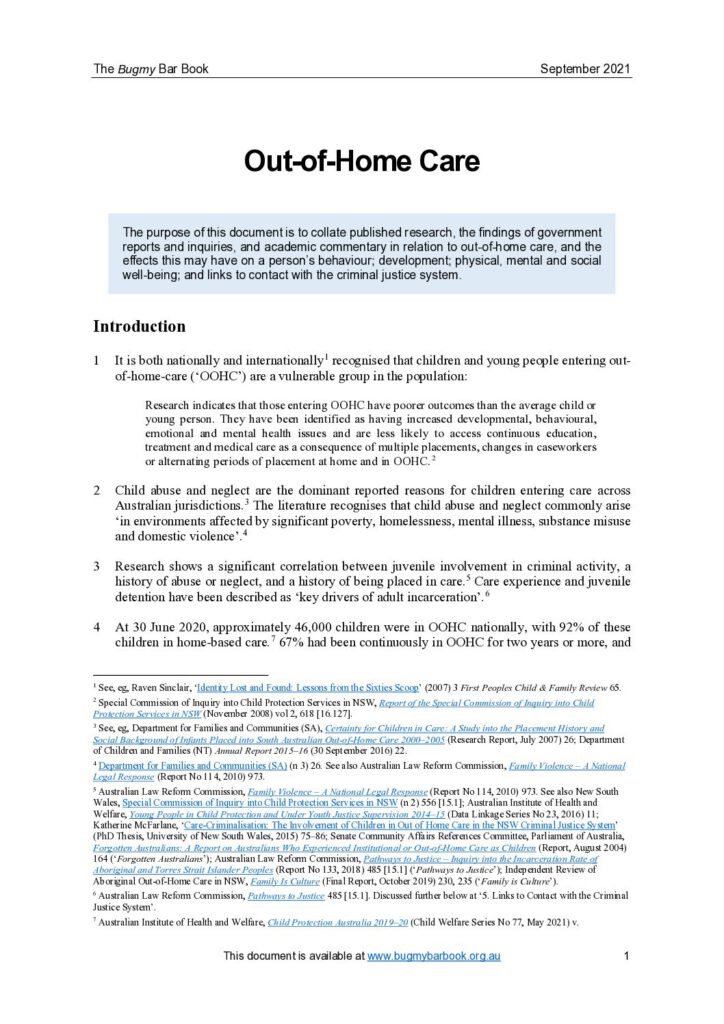
Out of Home Care
Care experience and juvenile detention have been described as ‘key drivers of adult incarceration’.
Read more: Out of Home Care -
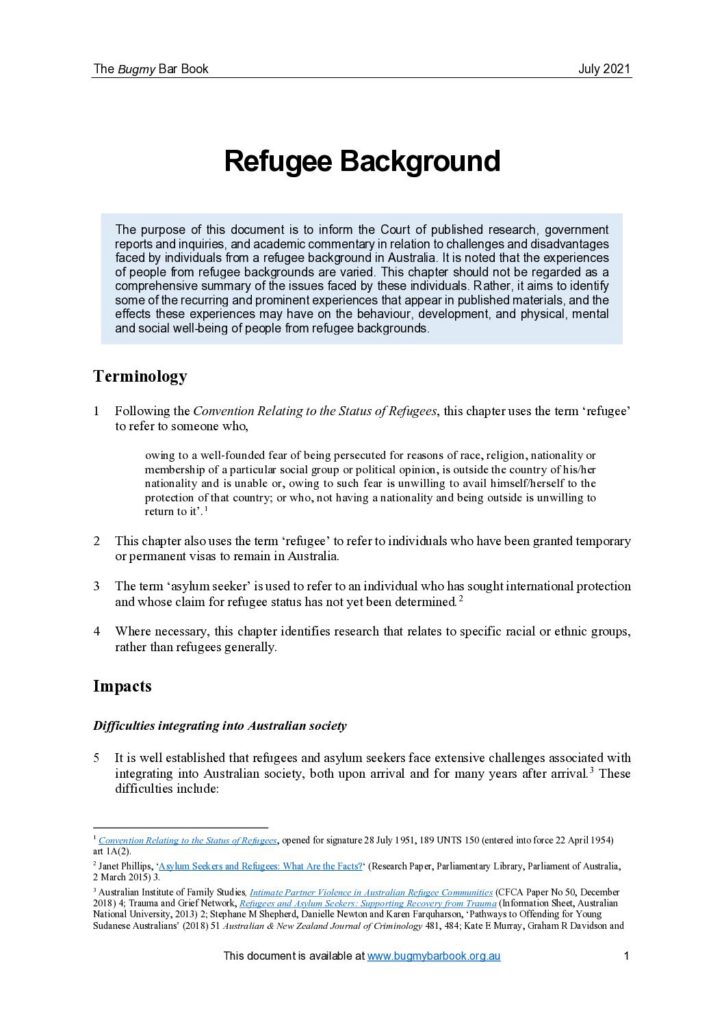
Refugee Background
Refugees and asylum seekers face numerous challenges in integrating into Australian society, including language barriers, housing instability, financial hardship, and discrimination.
Read more: Refugee Background -
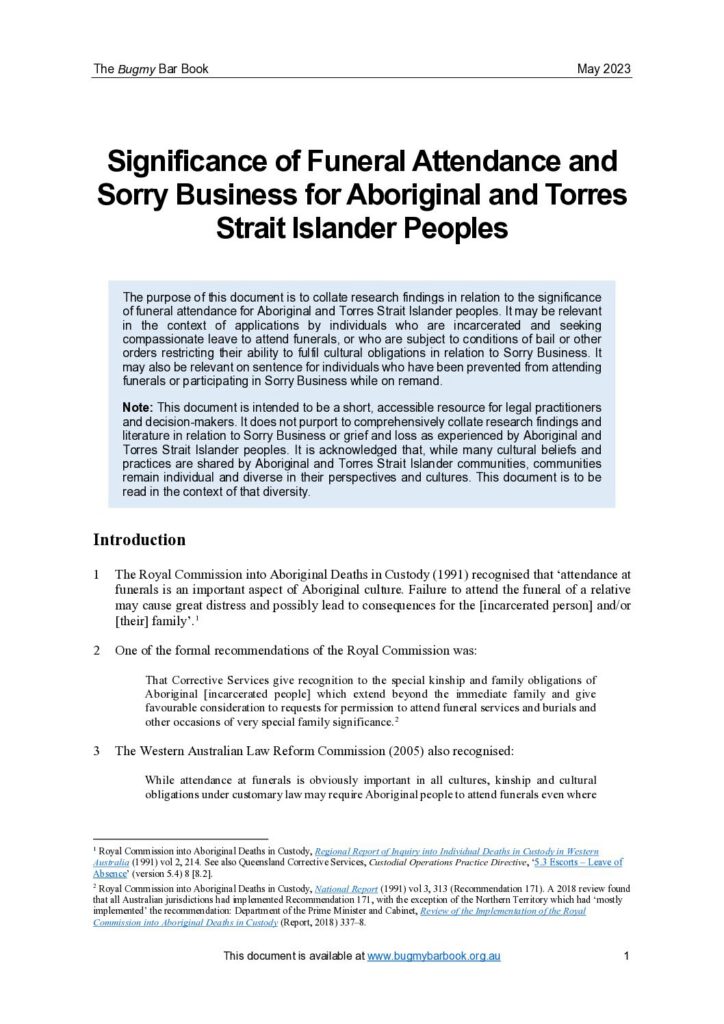
Significance of Funeral Attendance and Sorry Business for Aboriginal and Torres Strait Islander Peoples
It is widely recognised that ‘attendance at funerals is an important aspect of Aboriginal culture. Failure to attend the funeral of a relative may lead to consequences for an incarcerated person and their family’. Special kinship and family obligations of Aboriginal and Torres Strait Islander peoples extend beyond the immediate family.
Read more: Significance of Funeral Attendance and Sorry Business for Aboriginal and Torres Strait Islander Peoples -
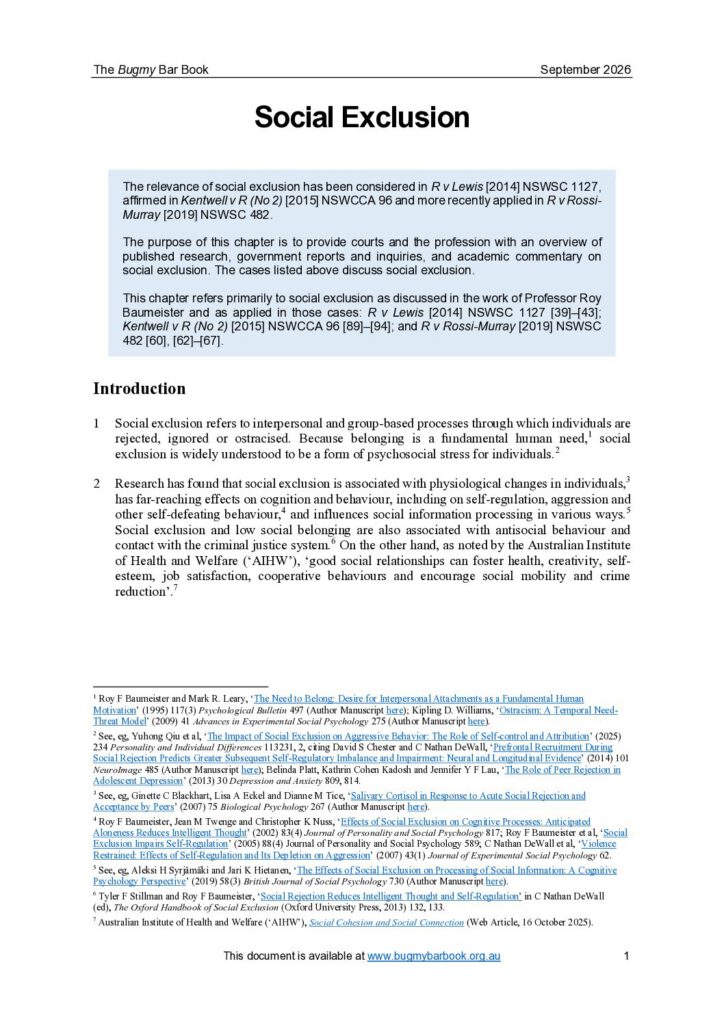
Social Exclusion
Social exclusion can have wide-ranging impacts on individuals and communities, leading to economic, educational, and health disparities.
Read more: Social Exclusion -
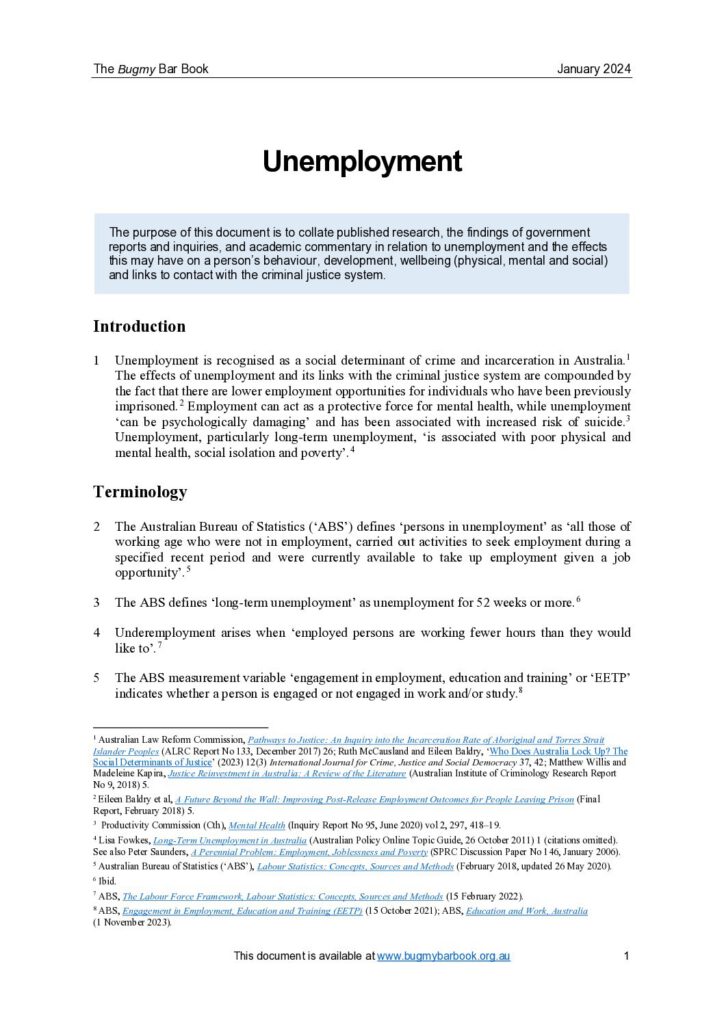
Unemployment
Lack of access to employment opportunities is associated with poor physical and mental health, social isolation, poverty and an increased likelihood of contact with the criminal process.
Read more: Unemployment